
Why Cannabinoid Testing Should Include More Than CBD Alone
Poring over only CBD can hide THC and other cannabinoids, risking mislabeling and noncompliance—so what should a complete panel include to prove it?

Poring over only CBD can hide THC and other cannabinoids, risking mislabeling and noncompliance—so what should a complete panel include to prove it?

Might trace THC show up on tests and subtly affect sleep or mood even without feeling high, and that’s why understanding “trace” matters next.

L**abeled clinical trials show CBD’s short-term effects, adverse events, and dose ranges, but they can’t prove long-term benefits or real-world effectiveness.

Overlook microbial testing details on your CBD report, and you may miss CFU/g, method limits, and pathogen results that determine compliance and contamination risk.

Diverse harvest lots and extraction choices can shift full-spectrum CBD cannabinoid and terpene profiles between batches—so your COA may reveal surprises worth checking.

G**et the real story behind full-spectrum hemp: flavonoids like quercetin may reshape antioxidant effects and stress signaling—then why do labels vary?

Unquestionably, lab-test dates matter for CBD quality because potency and contaminants can change after testing—so keep reading to avoid misleading COAs.

Journey into minor cannabinoids—small but powerful modulators of CB1/CB2 signaling—discover why they’re added to full-spectrum blends for balance, not just THC.
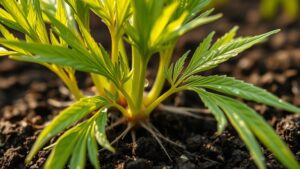
For reasons beyond curiosity, hemp can absorb soil contaminants via root uptake and rhizosphere chemistry—could your grow site be quietly supplying exposure over time?

H**aving GMP CBD manufacturing means controlled, traceable processes and objective release testing help prevent contamination and mix-ups, but what proof should you demand?