
Struggling to fall asleep—or waking up too often once you finally do—can quickly drain your energy and focus. If you’re looking for a nighttime option that supports relaxation without feeling overly “heavy,” cbdMD Delta 9 THC Lights Out Sleep Gummies are designed with bedtime in mind. By pairing CBD with a carefully measured amount of Delta-9 THC, they aim to promote a calmer, more comfortable wind-down that may help with both sleep onset and staying asleep.
In this article, you’ll learn what makes the “Lights Out” formula distinctive, what to consider before trying Delta-9 THC for sleep, and how to approach dosing safely and responsibly. Since cannabinoid research is still developing, understanding potential effects—like drowsiness and changes in appetite—will help you make a more informed choice. Next up, we’ll break down the product details and safe usage tips so you can feel confident before you try them.
Great Points
- Built to support faster sleep onset and fewer night awakenings by pairing Delta 9 THC with CBD for relaxation.
- Designed for bedtime use, typically taken 30–60 minutes before sleep for consistent absorption and sleep routine alignment.
- Start with the lowest dose (often one gummy) and avoid doubling if you miss a night.
- Common effects may include sleepiness, dry mouth, dizziness, or appetite changes; higher doses can increase anxiety.
- Delta 9 THC may trigger drug tests, so review THC content (COA) and workplace or travel policies before use.
Why cbdMD Delta 9 THC Lights Out Gummies Help Sleep
If you’re trying to improve your sleep, cbdMD Delta 9 THC Lights Out Gummies can help by targeting two key pathways involved in sleep onset and maintenance: relaxation and endocannabinoid signaling. When you build these effects into your nighttime routine, you’re more likely to experience better sleep quality—less time to fall asleep and fewer awakenings. Evidence from cannabinoid research suggests THC can modulate neural circuits related to arousal, while the broader endocannabinoid system supports sleep-wake regulation. By pairing Delta 9 with CBD, you may benefit from complementary signaling that promotes a calmer state without fully blunting natural sleep architecture. You should still use these gummies consistently, track your response, and follow your clinician’s guidance, especially if you take other sedating medications.
What “Lights Out” Bedtime Support Includes
With cbdMD Delta 9 THC Lights Out support, you get sleep-targeted Delta 9 designed to help promote nighttime rest. It’s paired with ingredients aimed at nighttime calm and relaxation, which may help reduce the mental and physical tension that can interfere with falling asleep. If you’re considering it, you’ll want to start with your clinician’s guidance and pay attention to how you respond, especially regarding next-day drowsiness.
Sleep-Targeted Delta 9 Support
When you’re building a “lights out” routine, Sleep-Targeted Delta 9 support is designed to help you unwind and stay on track at bedtime—not to replace sleep hygiene or medical care. These gummies deliver a measured dose intended to align with your sleep cycles by supporting the shift from wakefulness to deeper rest. For many people, Delta 9 may promote perceived relaxation and reduce the urge to keep checking the clock, which can be especially helpful if you tend to struggle with sleep onset. You can pair this approach with evidence-based relaxation techniques—like slow breathing or progressive muscle relaxation—to reinforce calm and help you maintain a consistent bedtime pattern. If you’re pregnant, nursing, or on sedating meds, ask your clinician first.
Nighttime Calm And Relaxation
Nighttime Calm And Relaxation is the “lights out” layer that helps you wind down in a steady, supportive way. You’re building consistency: pairing the gummies with nighttime rituals can help cue your nervous system for sleep, which aligns with behavioral evidence on stimulus control and routine. Thoughtfully chosen relaxation techniques may also reduce perceived stress and improve sleep onset for many people.
- Gentle, pre-bed timing to support a predictable wind-down window
- Breath-focused relaxation techniques to lower arousal and tension
- Simple nighttime rituals (dim lights, screen pause) to strengthen sleep cues
This clinically-informed approach is patient-centered: you should start low, assess how you feel, and talk with a clinician if you take other meds or have sleep conditions.
CBD vs. Delta-9 THC for Nighttime Relaxation
You’ll generally find that CBD can help you feel calmer without causing intoxication, which makes it a good fit if you want relaxation without feeling “high.” Delta-9 THC, on the other hand, has evidence for supporting sleep—though it can affect next-day cognition and may feel too strong depending on your sensitivity. Choose based on your tolerance and goals: if you’re sensitive or want minimal impairment, start with CBD; if insomnia is a major problem and you can tolerate THC, a lower-dose, short-term approach may be more appropriate.
CBD Calms Without Intoxication
Although both CBD and delta-9 THC can support sleep-related relaxation, they don’t work the same way in the body, and that difference matters if you’re trying to avoid feeling intoxicated. With CBD, you typically get calming effects without the psychoactive highs linked to THC; that’s one reason many people prefer CBD at night. Evidence suggests CBD may help with stress and anxiety pathways, which can indirectly make it easier to unwind and stay settled.
Consider how you want your cbd benefits to feel:
- Less “mind-altering” effect while you wind down
- Support for baseline nervous-system calm
- A more predictable bedtime experience
Clinically, if you’re sensitive to intoxication, CBD’s non-intoxicating profile can be a safer starting point—especially when you’re trying to sleep comfortably.
Delta-9 THC Supports Sleep
Delta-9 THC can support sleep by helping you feel more relaxed and drowsy, primarily through its interaction with the brain’s endocannabinoid system, which also influences how you process arousal and bedtime cues. If you’re comparing CBD vs. Delta-9 THC for nighttime relaxation, you’ll likely notice THC’s more direct sedating effect at appropriate doses, which may improve sleep quality for some people. Clinically, effects can vary: some folks feel calmer, while others experience the opposite. That’s why you should pair gummies with consistent sleep habits and relaxation techniques—like dim lighting, slow breathing, and reduced screen time—rather than relying on THC alone. If you’re sensitive to intoxication or have next-day grogginess, you may want to start low and monitor your response.
Choosing Based On Tolerance
How you choose between CBD and Delta-9 THC for nighttime relaxation often comes down to tolerance—especially how your body responds to cannabinoid signaling and sedation at baseline. Before you commit, do a tolerance assessment: note sleep latency, next-morning grogginess, and anxiety. If you’re sensitive, start with CBD first, since it generally carries lower psychoactive risk; if you’ve used THC before, you may need a smaller shift rather than jumping doses. Use careful dosage experimentation, because effects can change with recent use and individual metabolism. Consider:
- Sensitivity check: mild vs. strong effects after prior cannabinoids
- Timing review: onset window and how long you stay sedated
- Dose step plan: adjust slowly to avoid rebound insomnia
If Delta-9 “hits” too hard, scale back—or switch to CBD.
How to Take cbdMD Delta 9 THC Lights Out Gummies
When you’re ready to try cbdMD Delta 9 THC Lights Out Gummies, start low and be consistent—take one gummy about 30–60 minutes before bedtime, and avoid taking more than the label recommends until you know how it affects you. Use the dosage methods on the package rather than “topping up” mid-night. Because edible absorption varies, keep your timing and meal habits steady: try to take it on an empty or consistently similar schedule relative to food. Choose gummy types that match how you plan to take it—some are designed for full-night effect and are best followed by uninterrupted sleep. If you miss a dose, don’t double; wait until the next night. Stick to a consistent routine for a few nights to assess benefit and tolerability.
Start With the Right Dose for Your First Night
For your first night, start with the lowest dose that’s recommended on the label—typically one gummy—and give it time to work before considering more. Dose decisions should follow clear dosage guidelines and your individual factors, like body weight, tolerance, and whether you’ve used delta-9 THC before. If you’re sensitive to psychoactive effects, consider staying at the minimum dose for several nights to assess response.
- Track how long it takes to feel calming effects, and how strong they are
- Avoid combining with other sedatives or alcohol the first time
- Note next-morning alertness to fine-tune your dose responsibly
If you don’t notice benefits after the first trial, adjust cautiously rather than doubling—your goal is the smallest effective amount, not the biggest dose.
Timing Tips to Feel Sleepy Sooner
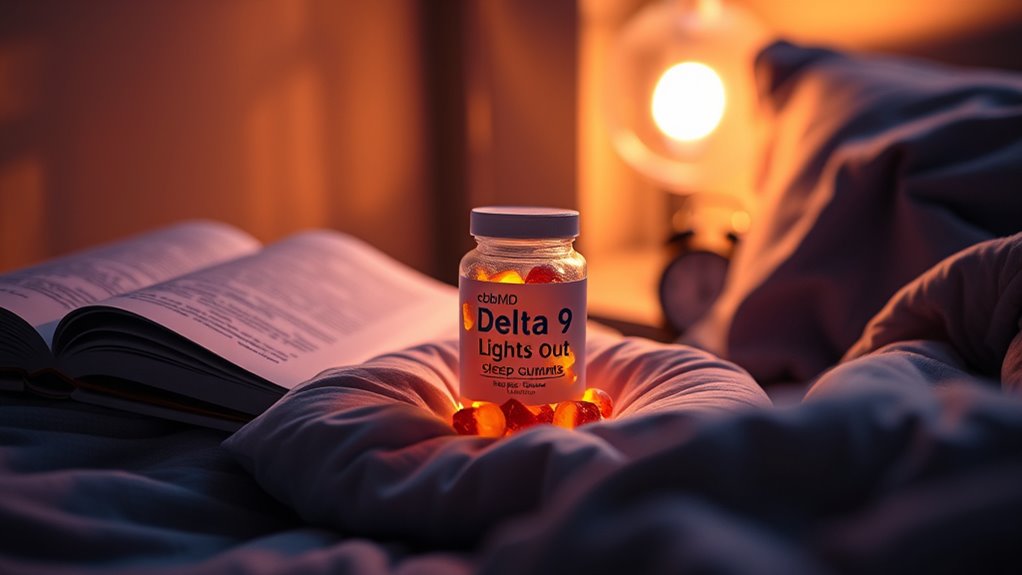
For best results, you’ll typically feel the most noticeable effects when you take your CBDMD Delta 9 THC sleep gummies on an empty stomach. Aim to take them about 60 minutes before bed so you have enough time for onset, and then keep a consistent bedtime schedule to reinforce your body’s circadian rhythm. If you don’t feel sleepy as expected, adjust timing within a reasonable range rather than immediately changing your dose.
Take On An Empty Stomach
Taking your CBDMD Delta 9 THC Sleep Gummies on a more empty stomach can help some people feel the sedating effects a bit sooner, because fewer food particles in the gut may slow absorption. When you’re choosing empty stomach effects, keep timing considerations in mind: absorption can vary with metabolism, dose, and your individual sensitivity.
- Try taking them after a lighter meal or a longer gap from your last snack, if it agrees with you.
- If you get nausea or stomach upset, don’t force it—taking with a small, low-fat snack may be more tolerable.
- Keep consistency night to night so you can track what works for you.
If you’re on other meds, talk to your clinician—changes in GI content can still affect how compounds behave.
Start 60 Minutes Before Bed
Start your CBDMD Delta 9 THC Sleep Gummies about 60 minutes before you want to fall asleep, since this timing gives your body enough opportunity to absorb and reach peak sedating effects. For many people, that window helps you feel drowsy sooner—without trying to force sleep once you’re already in bed. Pair the gummies with solid sleep hygiene: dim lights, silence notifications, and avoid stimulating screens. Build simple bedtime rituals that cue relaxation, like a warm shower, gentle stretching, or reading something calm. You’ll also want to plan around any travel time to bed—if you take them and then stay busy, you may delay the onset. If you’re new to Delta 9, start low and reassess how quickly you feel sleepy.
Keep Consistent Bedtime Schedule
Keeping a consistent bedtime schedule helps set your circadian rhythm, so your brain starts releasing melatonin at a more predictable time; try going to bed and waking up within the same 30–60 minute window every day—even on weekends. When you tighten that timing, your sleep hygiene improves and you’re more likely to feel sleepy at the same hour, which can reduce the time you spend awake in bed.
To make it easier, you can:
- Set an alarm for “lights out” and “wake up,” and don’t drift more than an hour.
- Use brief bedtime rituals (dim lights, quiet reading) to cue your nervous system.
- If you’re not asleep after ~20 minutes, get up, do something calm, and return when drowsy.
You’ll sleep better with fewer surprises.
What to Expect for Falling Asleep vs. Staying Asleep
When you use CBDMD Delta 9 THC Sleep Gummies, the biggest difference to expect is usually timing: some people notice they fall asleep more quickly, while others experience benefits that help them stay asleep once they’ve already drifted off. For sleep onset, you may feel calmer and drowsier sooner, but individual response varies with baseline insomnia type and stress level. If you’re aiming for sleep duration, pay attention to night-waking. Many clinicians recommend evaluating whether you’re getting fewer awakenings and more continuous sleep, not just fatigue. With any THC-containing product, you may also notice that effects peak and then fade; so you shouldn’t assume it will “knock you out” and cover the whole night. Track bedtime, awakenings, and next-day grogginess.
Ingredients and Quality Standards to Look For

When you’re shopping for sleep support, look for a full-spectrum cannabinoid profile that matches your symptom pattern rather than expecting one single ingredient to work for everyone. You should also choose products with third-party lab testing (e.g., COAs) that clearly report potency, cannabinoid breakdown, and contaminant screening for batch-to-batch consistency. Finally, check that the bedtime-targeted ingredient ratios are designed for nighttime use, so the THC/CBD balance and supporting components align with the timing of your sleep goals.
Full-Spectrum Cannabinoid Profile
A full-spectrum cannabinoid profile means the product includes multiple naturally occurring hemp-derived compounds—typically cannabinoids like CBD (and sometimes CBC/CBG), along with other phytochemicals such as terpenes and trace amounts of THC—rather than CBD alone. When you shop for cbdMD Delta 9 THC Lights Out Sleep Gummies, you’re looking for a formulation that supports cannabinoid synergy and sleep enhancement in a way that matches how the endocannabinoid system is thought to work. Clinically, some people report steadier outcomes when multiple constituents are present, though responses vary by individual. Prioritize profiles that include:
- CBD plus minor cannabinoids (CBC/CBG)
- Terpene-rich plant matter or equivalent terpene content
- Trace THC amounts consistent with hemp sourcing
Third-Party Lab Testing Standards
Third-party lab testing is your best checkpoint for verifying that cbdMD Delta 9 THC Lights Out Sleep Gummies match the label and are dosed consistently—so you can decide with confidence. Look for lab certification from an independent, accredited testing facility, with a recent Certificate of Analysis (COA). You want results for cannabinoid potency (including delta-9 THC), ensuring the product’s actual contents align with what’s printed. Evidence-based quality assurance also means screening for contaminants: heavy metals, pesticides, residual solvents, and microbial growth. A trustworthy COA reports detection limits and methods, not vague summaries. If batch numbers are listed, you can confirm the specific gummies you buy were tested. When COAs are easy to find, you’re more likely getting consistent dosing and safer ingredients.
Bedtime-Targeted Ingredient Ratios
Bedtime-targeted CBDMD Delta 9 THC sleep gummies should use ingredient ratios that make pharmacologic sense for nighttime use—meaning the CBD-to-Δ9-THC balance is designed to support relaxation without overshooting into unwanted psychoactive effects. When you’re choosing, look for evidence-aligned formulation principles: CBD generally helps modulate endocannabinoid signaling, while low, consistent Δ9 dosing may support sleep onset for some people.
- Ingredient sourcing: prioritize GMP-made components with clear cannabinoid profiles.
- Dosage accuracy: verify each gummy matches label milligrams within tight tolerances.
- Ratio consistency: avoid products that swing Δ9 content batch-to-batch, which can worsen next-day impairment.
As a patient-centered approach, start low, track response, and stop if you feel groggy, anxious, or overly sedated.
Flavor, Texture, and How Gummies Compare to Capsules
When you’re choosing CBDMD Delta 9 THC Sleep Gummies, flavor and texture matter because they directly affect how consistently you’ll take your dose at the right time. In clinical practice, adherence improves when a product’s taste experience feels tolerable and predictable, especially when used nightly. With these gummies, gummy benefits come from a uniform chewable format: they’re easy to portion, and most people find them straightforward to consume with water. Texture can also reduce unpleasant aftereffects—if you dislike hard or overly sticky candies, your compliance may drop. Capsules, by contrast, rely on swallowing and may feel less “sensory,” but they can trigger taste aversion for some. You’ll likely prefer gummies if you want a steady, routine-based taste experience.
Who cbdMD Delta 9 THC Lights Out Gummies Are Best For
Who should consider cbdMD Delta 9 THC Lights Out Gummies? If you’re a patient who struggles with sleep quality despite good sleep hygiene, these gummies may fit your plan. You’ll likely benefit if you want a consistent nighttime routine and value a simple dosing format that supports a calm wind-down. They’re also worth considering when you’re focused on user experience—easy to take and tailored for bedtime use.
- People with difficulty falling asleep and staying asleep intermittently
- Individuals who prefer a gummy delivery over oils or capsules
- Users seeking a predictable, bedtime-centered routine to reduce pre-sleep hassle
In clinical terms, cannabinoids may help some people with insomnia-like symptoms, though responses vary. If you’re unsure, discuss your goals with a clinician.
Possible Side Effects and Safety Considerations
Even though cbdMD Delta 9 THC Lights Out Gummies may help some people relax, it’s important to know that Delta 9 THC can cause side effects—especially when you’re new to THC or sensitive to cannabinoids. Common side effects can include sleepiness, dry mouth, dizziness, changes in appetite, and impaired coordination or reaction time. Some people also report anxiety or racing thoughts, particularly at higher doses. To keep safety precautions in mind, start low, take only at bedtime, and avoid combining with alcohol, sedatives, or other THC/CBD products. Don’t drive or operate machinery after taking them. If you’re pregnant, breastfeeding, under 25, or have a history of substance use disorder or psychiatric illness, talk with your clinician first.
Drug Testing, Legality, and Travel Considerations
Because Delta 9 THC can show up on drug tests, it’s important to understand how gummies like cbdMD’s Lights Out may affect results even if they’re marketed for sleep. You should treat them as potential contributors to positive outcomes, since drug screening often detects THC metabolites that can persist for days to weeks, depending on dose and frequency. Before you take them, check legal regulations in your state and where you’ll travel, because interstate commerce rules don’t override local laws.
- Confirm product THC content and COA results.
- Review workplace or medical drug screening policies.
- Plan for travel restrictions at airports and checkpoints.
If you’re traveling, keep gummies in original packaging, carry documentation, and consider alternatives if your testing risk is high.
How to Pair Gummies With a Wind-Down Routine
To make your cbdMD Delta 9 THC sleep gummies fit a wind-down routine, plan them as part of a predictable pre-sleep sequence rather than a last-minute fix—since THC effects can vary by dose, tolerance, and individual metabolism. Pair your dose with consistent wind down activities: dim lights, reduce screens, and keep the room cool and quiet. You can take the gummies after dinner or with a calming routine, then follow with a brief, repeatable set of evening rituals like gentle stretching, journaling, or reading. This supports cue-based sleep timing and reduces the chance you’re still alert when the dose peaks. Track how you feel the next morning, and keep the routine stable so your body learns the pattern.
When to Adjust Your Approach for Better Sleep
As your body learns what helps you settle, you may need to adjust your approach if your sleep isn’t improving as expected, even when you keep your wind-down routine consistent. First, evaluate sleep hygiene and how your evening routine aligns with your sleep cycles—caffeine timing, bedtime regularity, and light exposure. Then, check environmental factors: temperature, noise, and screen brightness can blunt any benefit.
If you’re using cbdMD Delta 9 THC Lights Out Sleep Gummies, consider a careful, stepwise change rather than switching everything at once. Track outcomes over 1–2 weeks and pair lifestyle adjustments with stress management.
- Try different relaxation techniques (breathing, progressive muscle relaxation)
- Add mindfulness practices if thoughts keep looping
- Reassess environmental factors and evening routine cues
Common Questions
How Quickly Do These Gummies Start Working After Taking Them?
You’ll usually notice effects within about 30–60 minutes after taking these gummies, though the onset time can vary. Individual factors—like your metabolism, whether you ate beforehand, dose, tolerance to THC, and overall sleep biology—can shift timing. For many people, peak effects occur around 1–2 hours. If you don’t feel anything after that window, don’t take extra sooner; instead, follow the label and talk to a clinician if needed.
Can I Take Lights Out Sleep Gummies With Other CBD or Melatonin Products?
Yes, you can, but you shouldn’t mix them casually—watch for dosage recommendations and product interactions. If you’re already using other CBD or melatonin products, take extra care: double-dosing can increase next-day drowsiness or dizziness. Start with the lowest effective dose, and avoid combining on the same night unless your clinician okays it. If you take other sedatives, talk to a healthcare pro first. Stop if you feel unwell.
Are These Gummies Vegan, Gluten-Free, or Free From Common Allergens?
Yes—you can check the label to confirm if these gummies are vegan and gluten-free, since formulations can vary by batch. Look for “vegan” and “gluten-free” claims on the package or official product page. For common allergens, you should also look for allergen testing or third-party verification details (e.g., allergen statements for milk, soy, peanuts, tree nuts, eggs, wheat). If you’re sensitive, contact the manufacturer.
What Should I Do if I Miss a Dose or Accidentally Double-Dose?
If you miss a dose, take it only when you remember—unless it’s close to your next dose; then skip and resume your schedule. Accidentally double-dosed? First, managing side effects matters: watch for excessive drowsiness, dizziness, or unusual heart rate. Avoid alcohol, driving, and more THC. Contact a clinician or poison control right away if symptoms feel severe or you can’t stay awake. Roughly 1 in 5 people report medication mistakes annually.
Will These Gummies Affect My Appetite or Cause Next-Day Grogginess?
Yes—these gummies can affect you, but it varies. Delta-9 THC may increase appetite in some people, though it’s usually mild and dose-dependent. If you’re sensitive, you might feel next-day grogginess or reduced next day alertness, especially with higher doses or if you sleep less. Start low, take them only as directed, avoid mixing with alcohol/sedatives, and monitor how you feel the following morning. Consult your clinician if concerns persist.
Overall
If you’re looking to give your nighttime routine a targeted boost, cbdMD Delta 9 THC Lights Out Sleep Gummies can be a simple place to start. Follow the directions on the label, begin with the recommended dose, and give your body a chance to respond as you work toward better sleep—one consistent night at a time. Consider pairing your gummies with steady bedtime habits to help reinforce the results you want, especially if you tend to struggle with falling or staying asleep.
Ready to take the next step? Choose your dose, try it as directed, and pay attention to how you feel so you can adjust responsibly. If you experience any unwanted effects or you’re taking other medications, talk with a clinician before continuing. Then make Lights Out your go-to wind-down routine and experience the difference for yourself—start today.