
If your dog’s mornings are slower, walks feel less effortless, or stairs suddenly seem like a bigger challenge than they used to be, you’re not alone. While many treats may offer temporary comfort, Paw CBD Hip Plus Joint Chews are designed with canine mobility in mind—focusing on the underlying causes that can contribute to stiffness over time. The goal is to support healthy movement by addressing factors linked to joint stress, so your dog can stay active for longer.
In this article, we’ll explore how CBD works alongside carefully chosen ingredients to help support joint function, and why consistency matters more than “quick fixes” when it comes to chronic, multi-factor discomfort. We’ll also discuss how to think about starting timing and choosing a suitable approach based on your dog’s size and needs—so you can feel confident using the chews as part of a safe, everyday routine.
Great Points
- Paw CBD Hip Plus Joint Chews support hip mobility by helping reduce inflammation-related stiffness over time.
- The formula aims to maintain cartilage matrix and synovial function for healthier, more comfortable movement.
- Expect gradual improvements starting around weeks 2–4 with steadier gait comfort by weeks 4–8.
- Administer with food and follow label dosing, starting cautiously and monitoring for GI upset or sleepiness.
- Pair chews with low-impact activity and mobility tips like short walks, controlled stairs, and gradual exercise progression.
Why Hip Plus Joint Chews Help Stiff Dogs
If your dog’s hips feel stiff, Paw CBD Hip Plus Joint Chews can help by targeting common drivers of discomfort—namely inflammation and cartilage breakdown. You should think of hip stiffness as a joint-level problem: inflammatory mediators can sensitize nociceptors and accelerate matrix degradation, while thinning cartilage and subchondral stress worsen range of motion. By supporting anti-inflammatory pathways and promoting smoother tissue function, these chews aim to improve joint health without relying on harsh strategies. You’re also using natural remedies that fit a mobility-focused regimen, especially when stiffness appears after rest or activity. When you monitor stride, sit-to-stand shifts, and post-exercise stiffness over time, you can gauge whether reduced inflammation translates into better hip mechanics. Consistency matters.
What’s Inside Paw CBD Hip Plus Joint Chews
Paw CBD Hip Plus Joint Chews are formulated to address hip discomfort through complementary, evidence-aligned mechanisms—primarily by modulating inflammatory signaling and supporting cartilage-relevant pathways. You’ll find CBD included for its potential role in dampening pro-inflammatory cascades, which can contribute to joint pain sensitivity. The formula also supports extracellular matrix maintenance by pairing joint-focused nutrients that align with cartilage health and synovial function. Alongside these ingredient benefits, you get a functional blend of compounds commonly used to promote mobility, including antioxidants to help counter oxidative stress in joint tissues. The chew texture is designed to be easy to handle and consistent, supporting reliable daily dosing without crumbling.
When to Start Hip Support Chews for Mobility
When should you start Hip Support Chews for mobility? You should consider when to start based on early joint degeneration signals and your dog’s functional baseline. Mechanistically, joint-support blends aim to support cartilage matrix, synovial fluid environment, and periarticular comfort—effects are most useful when instituted before chronic inflammation becomes established. Benefits timing matters: early, consistent dosing can better align with progressive mobility decline rather than trying to “catch up” after stiffness is entrenched.
- Right at first hip signs (mild stiffness, reduced sit-to-stand, slower gait), not after severe lameness.
- With age or risk factors (large breed, prior hip injury, athletic decline), using benefits timing for prevention.
- Around workload changes (increased stairs, training, weight gain), since microtrauma can amplify inflammatory cascades.
How to Give Paw CBD Hip Plus Joint Chews Safely
You should dose Paw CBD Hip Plus Joint Chews strictly by your dog’s weight and age, since CBD effects and tolerability depend on exposure. Start with the label-recommended amount and titrate cautiously while monitoring for adverse effects like GI upset, sedation, or changes in appetite. If you notice concerning symptoms or your dog takes other medications, you should contact your veterinarian promptly to adjust the plan.
Dose By Weight And Age
To dose Paw CBD Hip Plus Joint Chews safely, you’ll want to match the product amount to your dog’s body weight and life stage, since CBD exposure is dose-dependent and varies with distribution and metabolism across age groups. Use evidence-based dosage guidelines: calibrate by dog weight first, then adjust for age factors (puppy, adult, senior) that can alter hepatic clearance and endocannabinoid tone. This mechanistic fit supports chew effectiveness and mobility benefits within a safe therapeutic window, aligning with canine nutrition and holistic approaches while respecting health considerations.
- Choose dose by dog weight using the label’s table as your starting point.
- Adjust for age factors: older dogs may need lower starting amounts.
- Maintain steady dosing frequency to preserve cannabinoid receptor signaling for joint support.
Monitor For Adverse Effects
Once you start Paw CBD Hip Plus Joint Chews, monitor for adverse effects during the first several doses, since dogs can show sensitivity based on dose, body weight, age-related metabolism, and concurrent medications. You should administer the chew with food to support stable absorption and reduce GI irritation. For the first 3–7 days, check your dog at intervals for monitoring symptoms such as vomiting, diarrhea, drooling, lethargy, appetite loss, or sedation. If the product contains cannabinoids, CBD can modulate hepatic enzymes (e.g., via CYP pathways), potentially increasing exposure of other drugs—watch for unexpected changes in coordination, tremor, or behavioral dulling. Record timing, dose, and symptoms. If adverse reactions appear, stop the chew and contact your veterinarian promptly.
Choosing the Right Chews by Dog Age and Size
You should match Paw CBD Hip Plus Joint Chews to your dog’s age because mobility support and tolerable dosing differ as cartilage wear and inflammatory signaling change over time. You also need size-matched chew portions so the active ingredients land within an appropriate exposure range and chewing behavior is consistent. When choosing, prioritize age- and weight-appropriate dosing to support joint comfort while minimizing the risk of adverse effects.
Age-Appropriate Mobility Support
As your dog ages, mobility demands shift, and choosing the right Paw CBD Hip Plus Joint Chews by age and size helps match the expected dosing range to differences in cartilage wear, inflammatory tone, and joint biomechanics. During canine aging, synovial inflammation and subchondral changes can alter pain signaling and range of motion. You’ll want earlier-intervention support for mild stiffness, and more consistent anti-inflammatory support once flare-ups become frequent. Mechanistically, CBD may modulate endocannabinoid signaling and inflammatory mediators, supporting joint health alongside structured activity.
- Younger seniors: target early synovitis-related stiffness with steady dosing.
- Mature dogs: prioritize anti-inflammatory balance during activity increases or arthritis progression.
- Older dogs: emphasize consistency to match altered biomechanics and pain sensitization.
Size-Matched Chew Portions
Size matters because chew dosing is intended to approximate a consistent CBD exposure relative to body mass, which is critical when joint inflammation and cartilage metabolism don’t scale linearly with age-related biomechanics. You should match chew portion size to your dog’s weight and stage: younger, smaller dogs often benefit from lower absolute intake, while larger, older dogs may require more total mass-adjusted dosing to maintain synovial and neuromuscular support. Mechanistically, CBD’s anti-inflammatory signaling is dose-dependent, and underdosing can leave COX-2–mediated pathways insufficiently modulated, while overdosing increases gastrointestinal risk. Choose based on portion guidance rather than appetite alone, and confirm acceptance via appropriate chew texture and flavor options so your dog chews fully.
What Results to Expect From Hip Plus Joint Chews
With Paw CBD Hip Plus Joint Chews, typical results hinge on how consistently you support the underlying inflammatory and joint-stiffness pathways over time. In canine wellness and joint health, you’re mainly targeting dysregulated inflammation signaling and end-stage comfort, not instant pain relief. Because chondroprotective effects and synovial environment changes follow a biologic timeline, improvements are usually incremental rather than dramatic.
- Week 2–4: you may notice improved mobility and reduced morning stiffness as inflammatory mediators are modulated.
- Week 4–8: expect steadier gait comfort while joint-support nutrients help maintain cartilage matrix integrity and synovial function.
- After 8+ weeks: you’re more likely to see sustained support for joint health, especially in recurring flare patterns.
If symptoms worsen, you should consult your veterinarian.
Combining Hip Support Chews With Healthy Activity
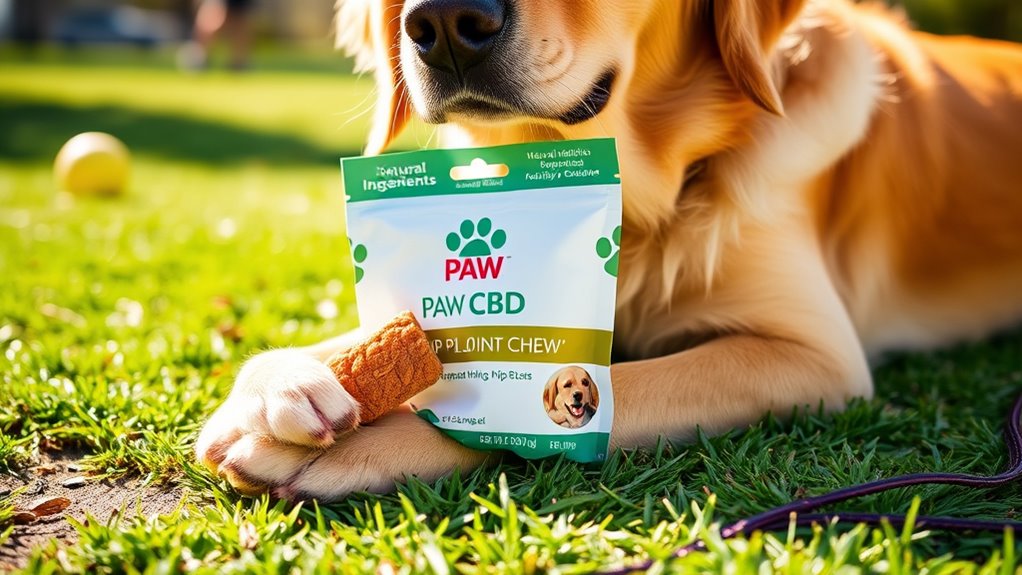
To support daily movement, you should pair Hip Support Chews with a consistent low-impact routine, since regular mechanical loading helps maintain joint mobility and muscle function. Active play—such as controlled walking, gentle stairs, or short play bursts—can complement the chews’ aim to reduce discomfort and support normal tissue homeostasis. Start with short sessions and progress gradually, adjusting activity based on gait and tolerance to keep the dose–activity balance clinically appropriate.
Hip Support For Daily Movement
When you pair Paw CBD Hip Plus Joint Chews with consistent, joint-friendly movement, you can better support the mechanical demands placed on your hips during everyday activities. In a clinical context, daily dosing may complement canine exercise by targeting inflammation signaling and pain perception, helping you maintain joint flexibility and reduce stiffness-related gait changes. Think of movement as the stimulus that lubricates articular surfaces, strengthens supporting musculature, and preserves range of motion. Chews work alongside that biology: you’re not replacing activity—you’re optimizing the environment for it.
- Schedule short walks to encourage synovial fluid exchange.
- Use controlled stretching to support joint flexibility without provocation.
- Monitor stride symmetry and comfort to adjust intensity.
Pair Chews With Active Play
Active play can be where Paw CBD Hip Plus Joint Chews shine alongside your training plan, because intermittent, load-bearing movement helps maintain joint range of motion and supports tissue resilience. When you pair chews with active play, aim for cycles of controlled intensity—short sprints, gentle pivots, and repeated sit-to-stand shifts—then rest. This pattern stimulates synovial fluid movement, promotes cartilage nutrition, and supports mechanotransduction that helps regulate inflammation. Feed the chew with consistency on training days, then progress the session from low-impact warmups into mobility routines that mirror play demands: hip extensions, lateral weight shifts, and slow hamstring reaches. If your dog shows stiffness, reduce duration, emphasize surfaces with traction, and maintain the same chew schedule to support recovery between bouts.
Canine Mobility Tips for Stairs, Ramps, and Walks
Even though stairs, ramps, and longer walks seem routine, they can repeatedly load an aging dog’s hips and stifles in ways that exceed what irritated joints can tolerate—especially with reduced range of motion and impaired proprioception. Use stair safety techniques: keep sessions short, lead with treats, and slow descents to reduce eccentric stress. For ramp training, start flat-to-near-flat slopes, support the pelvis, and progress by angle only when gait symmetry returns. On walks, apply walk strategies: allow frequent micro-pauses, avoid abrupt turns, and choose consistent footing to stabilize sensory feedback. Consider mobility aids (low-friction ramps, harness support) to offload joint moments during changes, then reinforce with canine exercises that improve weight shifting and hip extension.
- Reduce step height exposure.
- Practice controlled incline changes.
- Monitor stride length and paw placement accuracy.
Potential Side Effects and When to Call the Vet
Potentially, adding Paw CBD Hip Plus Joint Chews can shift your dog’s comfort and inflammatory signaling, but it can also cause side effects depending on dose, baseline health, and how their liver processes cannabinoids. Because CBD is metabolized in hepatic pathways, dogs with liver disease or drug interactions may show intolerance; common side effects include GI upset, sedation, or changes in appetite. Watch for rare signs like vomiting that persists, tremors, jaundice, or severe lethargy—those warrant a vet consultation.
| What you notice | What it may mean |
|---|---|
| Loose stools | GI irritation |
| Decreased appetite | Dose-related intolerance |
| Sleepiness | CNS effects |
| Itching/rash | Hypersensitivity |
| Dark urine | Possible liver stress |
If symptoms last >24–48 hours, or you suspect liver involvement, call your vet promptly. Don’t adjust the dose on your own.
Compare Paw CBD Hip Plus Joint Chews to Other Options
When you compare Paw CBD Hip Plus Joint Chews to other joint-support options, the key difference is the primary mechanism: CBD may modulate inflammatory signaling through cannabinoid receptors and related pathways, while many alternative products rely mainly on glucosamine/chondroitin for cartilage substrates, omega-3 fatty acids for eicosanoid shifts, or NSAIDs for direct cyclooxygenase inhibition. That means your ingredient comparisons should focus on inflammatory mediators, not just symptom relief. You’ll often see varied onset: nutraceutical substrate approaches may take weeks, while NSAIDs can act faster but carry GI/renal risk. With natural alternatives, you’re typically choosing a gentler, modulation-focused strategy.
- CBD: targets endocannabinoid-linked inflammation
- Glucosamine/chondroitin: supports cartilage matrix
- Omega-3: shifts prostaglandin/leukotriene balance
Common Questions
Are Paw CBD Hip Plus Joint Chews Safe for Puppies Under Six Months?
Yes, but you shouldn’t assume they’re safe for puppies under six months. CBD can affect developing physiology, and joint supplements often contain minerals or actives that may interact with growth needs. For puppy safety, follow the label’s dosage guidelines precisely and confirm with your vet before use. Mechanistically, CBD’s anti-inflammatory effects and potential endocannabinoid modulation aren’t well studied in very young dogs, so clinical data are limited.
How Long Does a Bag Last for an Average-Sized Dog?
For an average-sized dog, a bag typically lasts about 30–60 days, depending on your dosage recommendations. With most owners giving 1 chew per day (or based on body weight), you’ll chew through ~30–60 servings in a 30–day to 2‑month window. Chew consistency matters too—if it’s easier to break down or slightly larger/smaller than expected, your intake pace may change, slightly extending or shortening the bag’s duration.
Do These Chews Taste Good, and Will Picky Eaters Eat Them?
Yes—most dogs accept CBD joint chews, because palatability is driven by aroma and texture plus any added flavoring, which you can match to your dog’s flavor preferences. But evidence on universal taste is limited; individual variability is common. If your dog is a habitual picky eater, you might need a gradual introduction (small dose first) or mixing with food to improve acceptance. Always monitor for GI upset and stop if it happens.
Can My Dog Take Hip Plus With Other Joint Supplements?
Yes, you can often give Hip Plus alongside other joint supplements, but you need to watch joint supplement interactions. Mechanistically, glucosamine/omega-3/curcumin components may add anti-inflammatory and cartilage-support signaling; CBD may modulate endocannabinoid pathways and pain perception. Don’t duplicate overlapping ingredients at high doses. Confirm total omega-3, glucosamine, and any NSAID use don’t exceed label targets. If your dog has liver disease, bleeding risk, or meds, ask your vet first.
Is Paw CBD Hip Plus Joint Chews Thc-Free and Third-Party Tested?
Yes—Paw CBD Hip Plus Joint Chews are marketed as THC-free and third-party tested, typically verified by a current COA. You should still confirm the batch-specific certificate before buying, since THC contamination risk depends on sourcing and testing methods. For cannabinoid benefits, CBD may modulate inflammation and pain signaling via non-intoxicating cannabinoid pathways. Follow dosage guidelines from the label or your vet for safe, effective dosing and monitoring.
Overall
If your dog’s mobility is feeling stiff, these chews may help support gradual improvement by targeting inflammation and oxidative stress—two common contributors to joint discomfort over time. The earlier you start (when appropriate for your pet), the more you can help address the wear-and-tear that builds up day by day. Keep giving Paw CBD Hip Plus Joint Chews consistently and safely according to the label dosage, and keep an eye out for any signs of GI upset or unusual drowsiness.
Ready to support your dog’s “glow-up” from the inside out? Choose Paw CBD Hip Plus Joint Chews today and give your pup the joint care they can count on—no overnight miracles, just steady, thoughtful support that adds up. Take the next step now: