
If you’re considering Global Health Farms CBD Gummies, the smartest place to begin is with how the hemp is sourced and documented before any extraction ever happens. Reliable CBD starts long before the final gummy is made—so you’ll want to understand what’s tracked from farm to batch, how hemp quality is verified, and how extraction and refinement steps are controlled. Even small process variations can influence cannabinoid levels, which is why looking closely at consistency—rather than just the final label—sets the foundation for safer, more predictable use.
From there, the real confidence comes from understanding how key production variables are managed, including decarboxylation, the type of cannabinoid spectrum used, and the way batch records and labeling are maintained. You’ll also want to know which potency and uniformity tests are performed, what quality standards are expected, and which storage factors can still affect stability over time—so you get clearer guidance on what to look for and why it matters before you decide.
Great Points
- Describe hemp sourcing compliance, including qualified suppliers, lot traceability, and chain-of-custody documentation for THC-limit adherence.
- Explain extraction and refinement controls, such as batch records, monitored process parameters, solvent removal, and cannabinoid standardization.
- Cover decarboxylation and spectrum options (full-spectrum vs broad-spectrum), including post-process potency checks and legal THC threshold verification.
- Detail gummy development and QC, including dosing calculations, mixing/homogeneity validation, stability testing, and ingredient and flavor system documentation.
- Outline storage and safety controls, focusing on water activity, packaging integrity, label-to-batch reconciliation, and ongoing potency sampling via validated HPLC.
How Global Health Farms CBD Gummies Start With Hemp Sourcing
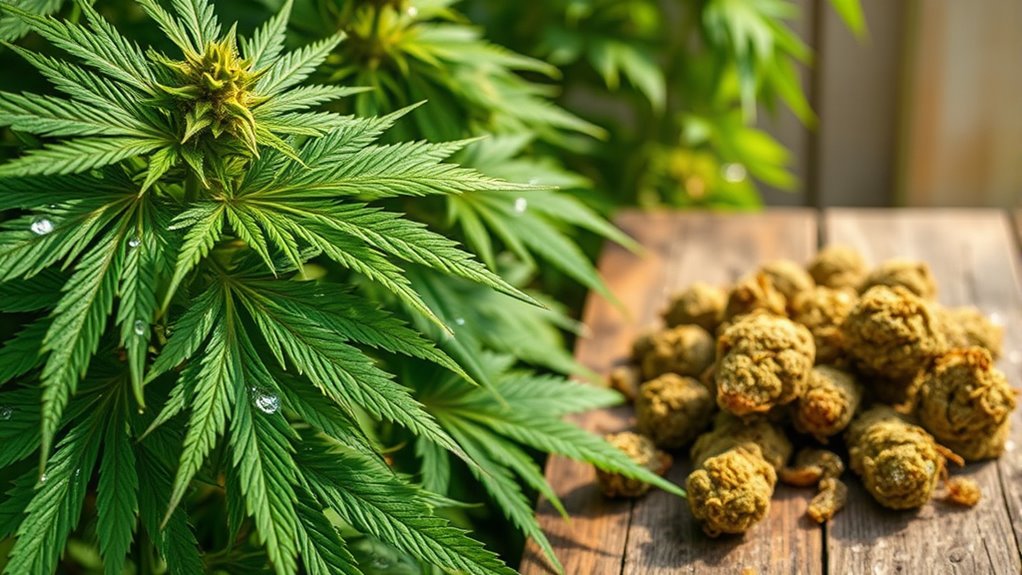
When you buy Global Health Farms CBD Gummies, the process starts long before you open the jar—at hemp sourcing. You should expect Global Health Farms to document supplier qualification, because input risk begins with where hemp comes from. You’ll want traceability: lot identifiers, harvest dates, and chain-of-custody records that let you verify every batch. During hemp sourcing, farms and processors are assessed for regulatory alignment, including compliance with applicable hemp definitions and THC limits. You also evaluate sustainability practices, since soil health, water use, and responsible farming reduce long-term supply volatility. Ask for COAs at the raw material stage and retained samples to support audits. This documentation-driven approach helps you manage contamination, adulteration, and labeling risk before any gummies are formulated.
What Happens During CBD Extraction From Hemp Biomass
Once hemp biomass has been properly sourced and documented (including lot IDs and harvest details), the CBD extraction process begins with risk-controlled handling and clear batch records, so you can trace what went in and what comes out. You start by verifying cannabinoid profiles against incoming COAs, then you weigh, size-reduce, and segregate material to prevent cross-contamination. You select approved extraction methods (e.g., solvent-based or supercritical CO2) based on your risk assessment, equipment qualification, and environmental controls. During extraction, you monitor temperature, pressure, time, and pH to reduce variance and limit unintended compounds. You capture in-process samples, lab results, and deviations in real time. You then separate the crude extract from solids, label fractions, and retain retention samples for compliance and downstream testing.
How Refinement Turns Crude CBD Into Consistent Oil
As you move from crude CBD to refined oil, you need tight controls for solvent removal and purification to reduce residuals and document each step. You should standardize the purified oil to a defined cannabinoid profile and purity spec, with batch records that show every adjustment and test result. By confirming consistency through COAs and in-process checks, you mitigate compliance risk before the oil is used in CBD gummies.
Solvent Removal And Purification
To convert crude CBD into a consistent, compliant oil, you have to remove residual solvents and then purify the extract to meet your quality specifications. You should start by identifying solvent types used in extraction, then evaluate residual risk using validated sampling plans and acceptance limits. During solvent removal, you monitor temperature, pressure, and vacuum profiles to reduce carryover while protecting cannabinoids and preventing degradation. You document each run: batch IDs, equipment calibration status, and atmospheric controls to support audit readiness. Next, you apply purification techniques such as short-path distillation, filtration, and polishing steps to remove impurities, odors, and trace contaminants. You verify results with COA-linked testing and impurity profiling, ensuring no regulatory exceedances before the oil moves forward.
Standardization For Consistent Oil
Refining doesn’t just remove solvents and impurities—it standardizes your crude CBD into a consistent, compliant oil batch by batch. You use defined standardization methods so each run hits target potency, purity, and contaminant thresholds, not “close enough.” First, you quantify cannabinoids and residuals with validated assays, then you adjust blends to control oil consistency.
- Define specifications (CBD %, THC limits, heavy metals, residual solvents) before processing.
- Apply standardization methods during refinement: filtration, fractional conditioning, and controlled blending.
- Verify lot-to-lot performance using COAs, retention samples, and traceable QA records.
- Lock release criteria—if results drift, you reprocess or reject the batch.
You document every parameter to reduce regulatory and consumer risk.
Decarboxylation Explained in the CBD Gummy Process

You should document your decarboxylation step because it’s what activates cannabinoids for consistent gummy effects. During heating, THCA can convert to THC, so you’ll need verified parameters, batch records, and COA alignment to manage potency and legal risk. By controlling timing and temperature and recording each run, you can improve activation efficiency while supporting reproducibility and compliance.
Decarboxylation Activates Cannabinoids
Decarboxylation is the heating step that activates cannabinoids in your CBD gummy, because many cannabinoid compounds naturally exist in an acidic form (like CBDA) that won’t provide the intended effects until they’re converted. When you follow validated processing parameters, you support cannabinoid activation while minimizing compliance and quality risks. Keep batch records of time, temperature, and cooling, and confirm incoming raw material specs align with your formulation for consistent therapeutic benefits.
- Verify COA values for CBDA/CBD ratios before heating.
- Control temperature and duration to avoid degradation.
- Document equipment calibration, batch ID, and operator sign-off.
- Use post-process testing to confirm conversion and potency.
Heat Converts THCA To THC
While decarboxylation is often discussed as the step that activates CBD pathways, the same heat process can also convert THCA into THC—so your gummy process needs tight controls to manage both potency and regulatory risk. During heat application, THCA undergoes decarboxylation, releasing CO₂ and changing the cannabinoid profile. If temperature control drifts upward, you can create unintended THC effects, complicating cannabinoid interaction and potentially undermining your intended THCA benefits narrative. Document every batch parameter: time, ramp rate, dwell temperature, and cooling method, plus COAs that confirm post-decarb values. Review legal implications by jurisdiction, since THC content thresholds drive eligibility. Finally, provide consumer education on what decarboxylation can do, aligning labels with measured outcomes.
Optimal Timing Improves Potency
Proper timing during the gummy-making decarboxylation step is one of the only levers you can tightly control, and it directly affects potency consistency. You should document batch parameters and use timing techniques to reduce variability between lots. If heat is applied too briefly, you under-convert precursors; too long increases degradation, lowering cannabinoids and shifting potency targets. For compliance, verify your internal SOP aligns with manufacturer guidance and local regulations, and record start/stop times, oven calibration, and dwell conditions.
- Pre-heat stabilization: start the timer only after temperature recovery.
- Dwell window: target the validated decarb interval for intended potency enhancement.
- Turn/merge steps: minimize cold spots to avoid incomplete conversion.
- Cooling control: stop conversion promptly and log post-decarb handling.
Full Spectrum vs Broad Spectrum: What Changes
What actually changes when you choose full-spectrum CBD gummies over broad-spectrum options? With full-spectrum, you’re typically ingesting CBD plus other naturally occurring hemp constituents, which may support cannabinoid synergy and reflect full spectrum benefits, but you also increase the likelihood of trace THC exposure—so you must confirm legal THC thresholds for your jurisdiction and maintain batch-level ingredient records. Broad-spectrum removes most THC-bearing compounds, aligning with broad spectrum advantages for consumers who want lower THC risk, though cannabinoid synergy may be reduced. For documentation, update your product file: spectrum type, hemp source details, serving amounts, labeling statements, and risk notices. Your consumer preferences should be captured via feedback, but your compliance decision comes first—verify tolerances, warnings, and any age or use restrictions consistently.
Third-Party Testing for Global Health Farms CBD Gummies
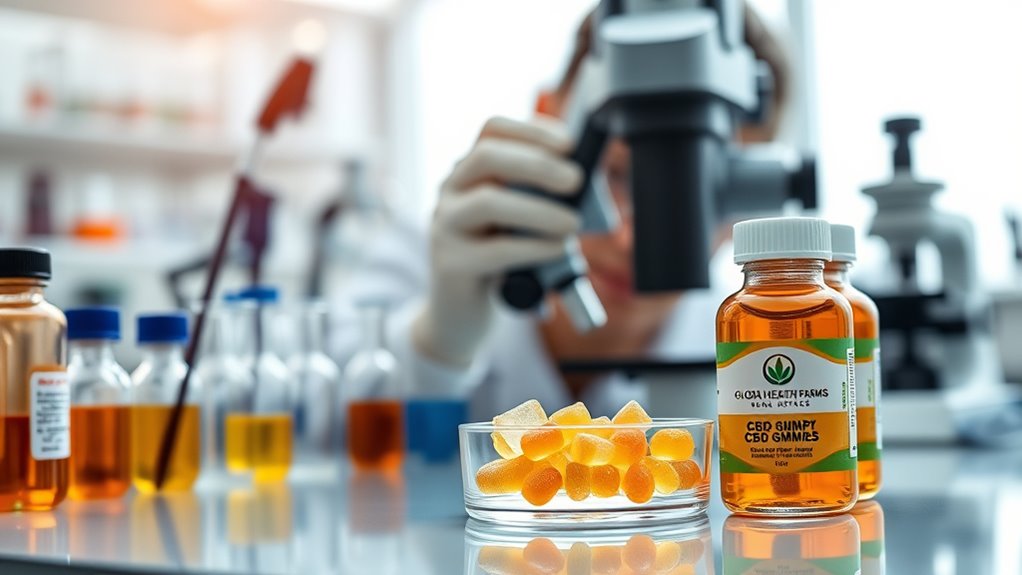
Before you decide on Global Health Farms CBD gummies, you should verify that every batch includes current third-party laboratory testing (COAs) from an ISO-accredited or otherwise reputable lab, and that the report matches the exact product SKU and lot number you’re buying or documenting. This compliance step supports safety protocols and reduces risk from mislabeling, contaminated inputs, or outdated results. Don’t rely on marketing screenshots—request the COA and confirm it’s current, complete, and consistent with your package records. For consumer education, track findings in your purchase log and escalate discrepancies to the seller.
- Confirm COAs are from reputable, independent labs.
- Validate SKU/lot alignment with your unit label.
- Review contaminants and microbials for compliance.
- Record COA dates and retain documentation.
How THC Levels Are Managed for Compliant Gummies
To stay compliant, you verify THC threshold adherence using THC threshold compliance testing for every release batch, and you document results in your COAs and QA records. If a batch trends toward the limit, you use batch-level THC adjustment methods—validated, traceable, and consistent with your regulatory specs. You also retain change-control and sampling traceability so you can defend decisions during audits or incident reviews.
THC Threshold Compliance Testing
To keep your gummies compliant, you need THC Threshold Compliance Testing that verifies finished product THC stays within the legal limit, not just at formulation. You’ll face THC regulations and compliance challenges if potency verification isn’t backed by reliable evidence. In practice, you use validated testing methods aligned to regulatory standards, including sample handling, chain-of-custody, and instrument calibration. Your lab reports should support quality assurance and product safety with clear pass/fail thresholds, uncertainty statements, and batch traceability.
- Test finished gummies, not only raw hemp.
- Require documented potency verification and chain-of-custody.
- Compare results to current regulatory standards and retention policies.
- Use consumer education materials reflecting tested limits.
Batch-Level THC Adjustment Methods
Managing THC at the batch level goes beyond formulation checks—it’s how you prevent out-of-spec finished-goods risk from batch to batch. You start with incoming lot COAs and run in-process THC profiling at defined hold points, then set acceptance criteria for each stage (mixing, filling, and post-cure). If profiling shows drift, you use documented batch adjustment steps—rebalancing isolate and diluent ratios or modifying blending allocations—rather than post-production dilution. Every change triggers an impact assessment, including re-testing frequency and worst-case calculations for customers and labels. You maintain batch records that link specific hemp input lots to final gummy results, including operator sign-off, instrument IDs, and deviation reports. This control strategy supports consistent compliance under current regulations.
Building the Gummy Formula: Dose, Texture, and Stability
Once you’ve set your target CBD amount and allowable THC limits, you need to define the gummy dose plan and document the exact process steps that keep each serving consistent and within specification. You start by translating batch targets into per-gummy dose calculations, then you control dosage adjustments through measured ingredient weigh-backs and in-process sampling. For texture, you apply gummy innovations and texture enhancements via standardized mixing times, viscosity checks, and cooling curves, so fill weights don’t drift and audits show cause-and-effect. Finally, you run stability testing on finished gummies under labeled storage conditions, monitoring moisture migration, CBD potency, and physical firmness. All deviations get recorded with corrective actions before release.
- Per-serving dose worksheet and batch formulas
- Texture/viscosity acceptance criteria
- In-process sampling plan with records
- Stability study schedule, endpoints, and retention samples
Choosing Sweeteners and Flavor Systems That Don’t Spoil
You should select sweetener types with proven stability in gummy matrices and record the supplier specs, batch test results, and expiry criteria to prevent spoilage or flavor drift. You also need to choose heat-resistant flavor systems compatible with your processing conditions, then document compatibility/thermal exposure studies and any required storage limits. Before release, verify outcomes against your stability plan (e.g., appearance, off-notes, moisture/texture changes) and keep deviation records for traceability.
Picking Stable Sweetener Types
When you’re selecting sweeteners for CBD gummies, stability has to come first—because the wrong sugar system can accelerate crystallization, sweetness loss, or flavor fade over shelf life. For compliance, you should document every natural sweeteners decision, including supplier specs, COAs, and batch/date traceability. Evaluate sugar alternatives for moisture sensitivity, hygroscopicity, and pH interactions with CBD and acids, then verify texture improvement targets under worst-case storage. Use flavor enhancement trials with locked formulations, and record sensory thresholds and instrumental readings for color/aroma drift. Prefer sweetener systems with low crystallization risk and predictable dissolution.
- Confirm COAs and impurity limits for each sweetener.
- Run stability pull tests at defined temps/RH.
- Track moisture migration to prevent grittiness.
- Archive formulation rationale, deviations, and results.
Selecting Heat-Resistant Flavor Systems
To prevent heat-driven spoilage in CBD gummies, you’ll want a sweetener-and-flavor system that stays stable through manufacturing and worst-case storage conditions, not just at room temperature. Select flavor concentrates and natural/identity-preserving flavor types with documented flavor stability across relevant temperature and humidity ranges. Require CoAs and supplier stability reports, then verify through accelerated and real-time studies. Map ingredient interactions in your formulation: acids, emulsifiers, colorants, and sweeteners can accelerate volatilization, discoloration, or flavor fade when heated. Screen for Maillard risk when reducing sugars meet amino compounds, and confirm no off-notes after pasteurization or drying steps. Lock critical parameters—addition order, mixing time, headspace, and packaging barrier—and retain batch records for traceable compliance.
Emulsifiers and Carriers: How CBD Gets Into Each Gummy
Even though CBD itself doesn’t naturally dissolve in water, reputable CBD gummy formulas rely on approved emulsifiers and carriers to help distribute CBD evenly and consistently across each serving. You should verify that your chosen emulsifier types are permitted under applicable regulations, and that the carrier agents used are food-grade, documented, and compatible with your manufacturing process. Poor dispersion can harm gummy consistency and increase variability between units, which can undermine absorption efficiency claims.
- Review COAs and supplier specs for each emulsifier and carrier agent.
- Confirm processing limits (mixing speed, temperature) won’t destabilize the dispersion.
- Validate batch homogeneity via in-process sampling and deviance checks.
- Maintain records linking ingredient lots to finished-gummy potency results.
Why Water Activity and Moisture Control Matter
Water activity (aw) and moisture control directly affect how your CBD gummies hold up across storage, packaging, and shelf life—especially since the same emulsifier-and-carrier system used for even CBD distribution can also be impacted by humidity. You need moisture management to prevent water uptake that can soften texture, drive viscosity shifts, and accelerate active ingredient variability. Track aw targets using calibrated instruments, and document results against your approved specifications. If packaging integrity fails or headspace humidity rises, you risk microbial growth and quality deviations, which can trigger regulatory complaints and product holds. Maintain validated desiccant use, sealed barrier films, and controlled environmental storage during warehousing. For compliance, establish and retain COA-supporting stability data showing shelf stability under defined temperature and RH conditions, including after opening when applicable.
How Gummies Are Filled, Sealed, and Batch-Labeled
Before you scale production, make certain your filling, sealing, and batch-labeling steps are executed under controlled procedures so you can demonstrate traceability and prevent quality deviations. You should control dosing systems to match target gummy consistency, verify fill volumes at defined intervals, and log operator, equipment, and time data. Use validated sealing techniques for each packaging configuration, confirming seal integrity and preventing leaks or oxygen ingress; document line clearances and any deviations with corrective actions. For batch-labeling, you must make certain label-to-batch reconciliation before product release, including lot numbers, manufacturing dates, and regulatory-required claims, then retain records per your quality system. 1) Calibrate dispensers. 2) Verify seal integrity. 3) Reconcile lot labels. 4) Maintain batch records.
Quality Checks That Verify Potency and Uniformity
Once your filling, sealing, and batch-labeling steps are under controlled procedures, you can’t stop at traceability—you need test results that confirm potency and uniformity for every batch. Establish an ongoing sampling plan tied to your risk assessment, then perform potency verification using validated methods (e.g., HPLC) to verify CBD concentration matches specifications. You should also run uniformity assessment across multiple units from each batch, confirming consistent ingredient distribution and acceptable variance. Record every raw result, instrument ID, analyst, batch number, and acceptance criteria in controlled documents. If any result falls outside specs, you must trigger deviation handling, hold release, investigate root cause, and document corrective and preventive actions. Maintain COAs, calibration records, and method suitability checks for audit readiness.
How Storage Conditions Protect CBD Potency Over Time
Proper storage matters because temperature, humidity, light exposure, and oxygen can gradually degrade cannabinoids and shift product potency beyond your labeled specifications. To protect storage longevity, you should manage these environmental variables from receipt through end-of-use, and document conditions as part of your quality program. Over time, heat accelerates breakdown, moisture can affect stability, and light can promote oxidative reactions. Oxygen exposure—especially after opening—can further erode potency preservation.
- Store in a cool, consistent temperature range, away from heat sources.
- Keep humidity low; use original, sealed packaging and avoid damp storage areas.
- Protect from light with opaque containers and limited shelf exposure.
- Reduce headspace oxygen after opening; reseal tightly and track storage dates.
When and How to Use Global Health Farms CBD Gummies Safely
To use Global Health Farms CBD Gummies safely, you should follow the product label for dosing and timing, and treat those directions as part of your risk-control process. Start with the recommended dosage, and record when you take each serving to support documentation and consistent monitoring. Use the ideal consumption timing stated on the label—don’t “stack” doses to speed effects. If you’re new to CBD, begin at the lowest labeled range and reassess after several days. Consider personal health considerations: pregnancy or nursing, liver disease, or a history of substance sensitivity. Review potential side effects like drowsiness, dry mouth, GI upset, or appetite changes, and stop use if you experience severe reactions. If you take medications, confirm interactions with your clinician before continuing.
Common Questions
Are Global Health Farms CBD Gummies Vegan and Free From Gelatin or Animal-Derived Ingredients?
Yes—Global Health Farms CBD Gummies are positioned as vegan and should be free from gelatin and other animal-derived ingredients, assuming you rely on their current labeling and product COA/ingredient sourcing documentation. You still need to verify whether they hold vegan certification (or equivalent attestation) for your specific lot, and confirm no cross-contact risks in manufacturing. Review the ingredient list, allergen statements, and third-party testing before purchase.
Do These Gummies Contain Added Sugar Alcohols That May Cause Digestive Discomfort?
Yes— you should check the label for sugar alcohols (like sorbitol, xylitol, or maltitol), because they’re commonly added and can trigger digestive discomfort in some people. For risk assessment and documentation, verify the Supplement Facts/Ingredients panel and look for “contains sugar alcohols.” If you’re sensitive, start with a small serving and monitor your digestive health. When in doubt, contact the manufacturer for full formulation details—better safe than sorry.
Can I Take CBD Gummies With Antidepressants, Blood Thinners, or Antihistamines?
Yes, you can sometimes take CBD gummies with antidepressants, blood thinners, or antihistamines, but you should treat this as medication safety and do a risk assessment first. CBD interactions may affect liver enzymes (like CYP450), changing drug levels. With antidepressants and antihistamines, watch for increased drowsiness or serotonin-related effects. With blood thinners, ask your clinician because bleeding risk could rise. Document your doses and start low only under medical guidance.
How Long Does It Typically Take to Feel Effects, and How Soon Should Results Be Assessed?
You’ll typically feel CBD gummy effects within 30–90 minutes, with peak onset timing around 2–4 hours; some people notice earlier or later depending on dosage recommendation and metabolism. For compliance and safety, assess results after the first full window (about 4–6 hours), then document any benefits or adverse effects for 24 hours. Don’t escalate your dose until you’ve logged outcomes; if you’re on meds, recheck with your clinician.
What’s the Shelf Life, and Can Gummies Be Frozen or Exposed to Heat?
Shelf life is typically 12–24 months if you keep proper storage conditions; check the label for the exact date. If you can, store gummies in a cool, dry, dark place, with tightly sealed packaging. Heat, sunlight, and moisture can degrade CBD and texture. Don’t freeze unless the manufacturer explicitly allows it—freezing may change consistency. As the adage goes, “forewarned is forearmed”: document dates, batches, and any exposure.
Overall
With Global Health Farms CBD Gummies, you can feel confident from start to finish—sourced from responsibly grown hemp and processed through controlled extraction, refinement, decarboxylation, and careful batch labeling. Quality checks help verify potency, consistent gummy-to-gummy dosing, and ingredient traceability before your order is packaged.
If you’re ready to take the next step, review the serving recommendations and use the product exactly as directed. For extra safety, especially if you’re pregnant, nursing, or taking medications, consider speaking with a healthcare professional before getting started—peace of mind built in, one gummy at a time.
One thought on “Global Health Farms CBD Gummies: From Hemp Extract to Finished Gummy”